
Menu
If your staff are already pasting client data into ChatGPT or other AI tools without a proper policy, you have a data problem that exists right now, not in the future. Claude for small business use is worth understanding because Anthropic, the company behind it, has built safety and data control into the product in ways that matter when you handle sensitive data. This page explains what Claude is, what your business can actually do with it, which plan gives you control over your data, and what you need to put in place before anyone on your team starts using it.
Book half an hour with Adam Gillett. He will talk you through how we approach AI data security, what we would put in place and why, and what we would be watching for in a business like yours. No charge and no expectation that you buy anything.





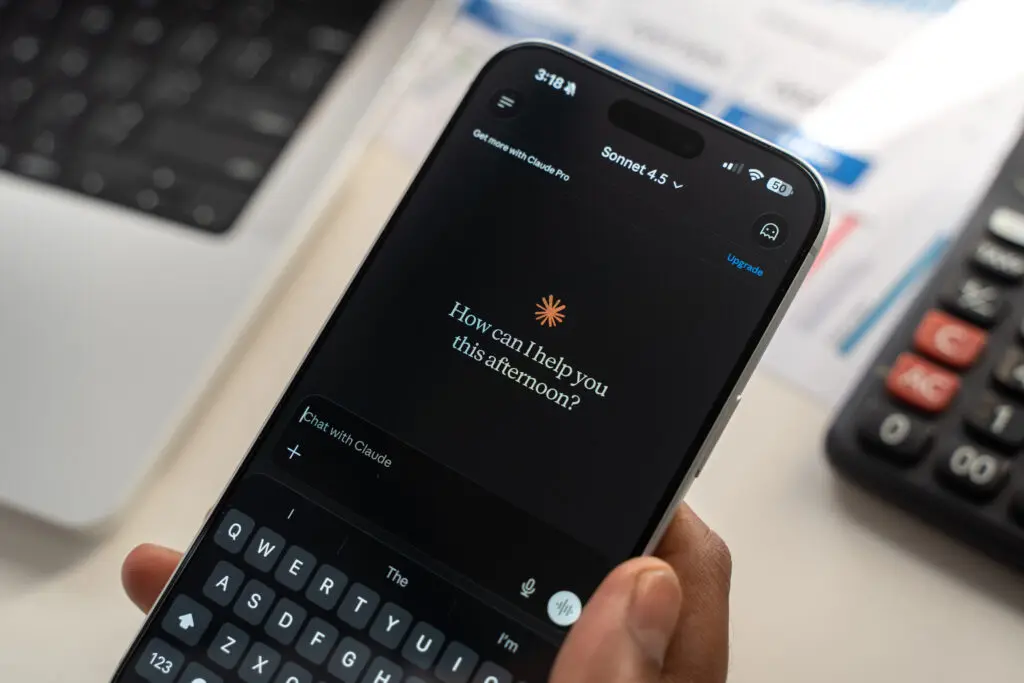
Claude is an AI assistant by Anthropic, similar to ChatGPT. You type a question or instruction in a chat window, and it replies. It can draft text, summarise documents, analyse data, answer questions about files, and help solve problems. Claude is built with Constitutional AI, training it against principles of helpfulness, honesty, and harmlessness. This makes it more cautious with sensitive topics, refusing harmful requests and self checking its outputs. For small business owners in professional services, finance, legal, healthcare, or education, this caution is important.
Claude can produce a first draft of a client proposal, a tender response, a grant application or a formal letter. You give it the key points and the tone you want, and it writes. You review, adjust and send. The time saving on a single tender response can be several hours.
If your team needs to digest a 60-page contract, a new set of FCA regulations or a lengthy compliance report, Claude can summarise the key points in minutes. Claude helps businesses with document processing by summarising extensive reports, so your staff spend their time on judgement rather than reading.
Claude can perform complex data analysis and generate clean summaries from spreadsheets. It can parse and clean up messy data, including CSV files. If you run client satisfaction surveys, Claude can identify themes across hundreds of open-ended responses. For a finance practice, it can pull the most important business insights from quarterly figures, including the monthly close. Claude helps in decision-making by providing actionable insights from data analysis, making it a genuine decision-support tool for small businesses.
A healthcare practice checking patient information leaflets, or a solicitor reviewing a client letter for tone, can use Claude as a contract reviewer to catch inconsistencies, suggest clearer phrasing and flag potential issues, producing fewer errors in final documents.
Claude can draft onboarding documents, process checklists and standard operating procedures. Your team then reviews and adapts them. Small businesses can also utilise Claude for creating marketing collateral and content calendars, and Claude can assist in strategic brainstorming and problem-solving for business strategies with roles like content strategist and lead triager.
Claude can aid in budget planning and financial modeling support. It can improve productivity by reducing repetitive work and speeding up decision-making around cash flow forecasting or payroll planning. It integrates with Intuit QuickBooks to check your QuickBooks cash position and with PayPal to track incoming PayPal settlements.
Claude offers several plans, and the difference between consumer plans and business plans is not just about features. It is about who controls the data.
Are designed for individual use. On consumer plans, your conversations may be used for model training unless you opt out. You have limited control over data retention. There are no admin tools, no centralised billing and no way for your organisation to manage what staff are doing. If five of your employees each sign up with personal accounts, you have five separate, unmanaged AI accounts with no oversight. That is shadow AI, and it is the real risk most businesses face today.
Are designed for organisations. The Team plan is aimed at groups of roughly 5 to 150 users. It provides more usage per person, access to Claude’s full model families, a large context window for handling long documents, collaboration features like Projects and Knowledge Bases, and admin tools with centralised billing. Critically, on business plans, your inputs and outputs are not used for model training by default.
Add further controls that matter for regulated sectors: role-based access controls, audit logs, spend limits, identity management through SSO and SAML, custom data retention settings, network controls and IP allow-listing. Enterprise security teams get the granular oversight they need. If your business handles regulated or sensitive data as a matter of course, and clients or insurers are asking questions about your AI governance, Enterprise features may be necessary.
For a UK business with 5 to 50 staff, the Team plan will often be sufficient, provided you are not routinely processing highly regulated data such as patient health records or detailed legal case files. If you are, check whether the Enterprise plan’s additional controls, particularly around data retention and compliance contracts, are needed. Anthropic updates its plans and pricing regularly, so verify the current features and costs on their pricing page before committing.
The core question is this: on a consumer plan, Anthropic controls the data. On a business plan, your organisation does.
Retention varies by plan and model. Business plans retain data within your organisation’s workspace, manageable by admins.
Some advanced models retain data for 30 days for safety reviews. Enterprise plans offer Zero-Data-Retention for sensitive data on eligible models.
On consumer plans (Free, Pro, Max), conversations may be used for training unless opted out. This is why consumer plans are unsuitable for business use.
On Team and Enterprise plans, no. Anthropic does not use your conversations or files to train models by default. Exceptions require explicit opt-in.
Claude uses AES-256 encryption at rest and TLS 1.2+ in transit. Anthropic holds SOC 2 Type II, ISO 27001, and ISO 42001 certifications.
Admins can export and manage departing users’ data centrally, unlike unmanaged consumer plans.
Business plans include confidentiality contracts, but you must ensure AI use complies with your client agreements.
Claude does not filter inputs; it processes whatever staff enter. Your AI policy is as important as the tool’s security.
Deploying AI without a policy is like giving every employee a company credit card with no spending rules. The tool is not the problem. The absence of governance is.
It should state which AI tools are approved, what types of data may and may not be entered, how to handle uncertainty, and what happens if someone gets it wrong. Keep it to one page if possible. It should be readable by every member of staff, not written for a compliance officer.
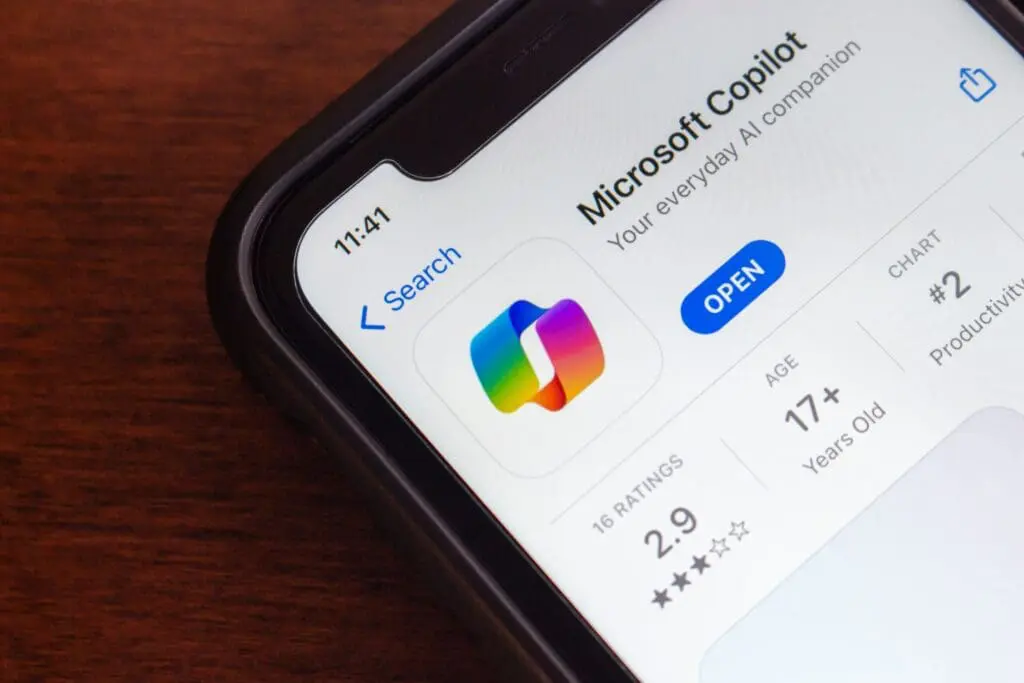
Specify exactly which tools your business permits: Claude Team, Microsoft Copilot, and anything else you have vetted. Make clear that using unapproved AI tools, including personal Claude accounts, consumer ChatGPT or any free online AI service, for work purposes is not allowed. Shadow AI is the real risk for most organisations.
Define what constitutes customer data, financial data, and sensitive files that must never be entered into any AI tool, or only entered under specific conditions. Give examples. “Do not paste client names and addresses into any AI tool” is clearer than “be careful with personal data.”
People need to understand not just the rules, but why. Cover what counts as sensitive data, how to anonymise or pseudonymise information before using AI, and how to check whether their intended use is compliant. Anthropic’s AI Fluency for Small Business is a free online small business course that covers the 4D Framework for effective AI use. The course is taught by experienced small business owners, and the Claude SMB Tour offers free AI fluency training workshops across multiple cities.
If someone accidentally pastes confidential client information into a consumer AI account, what happens next? Define who to notify, how to contain the issue, and whether clients need to be informed. Having the procedure written down before an incident occurs is what separates a manageable mistake from a data breach.
AI tools, Anthropic’s terms, and data protection requirements all change. Review your policy, check your tool configurations, and audit usage at least quarterly.
If you want a head start, download our free AI Policy Template and adapt it to your organisation.
Five guides sit beneath this page, each answering one question in full.
Start here if you are still working out what it actually does.
Read the guideWhat happens to your company data, and how it differs by plan.
Read the guideThe compliance position, and what to check in a data processing agreement.
Read the guideWhat gets exposed when you connect it to Microsoft 365 or Google.
Read the guideWhat a seat costs and what the plan includes.
Read the guideWhich tool fits which job, if staff are weighing up both.
Read the guideClaude is a genuinely useful tool for UK small businesses. The risk is not in the AI itself. It is in your data being over-shared, your staff using unmanaged accounts, and your organisation having no policy in place when a client, insurer or regulator asks the question.
Getting this right means choosing the correct plan, writing a clear policy, training your team and putting proper data governance around all your AI tools, not just Claude. That is what our Core AI Security Pack is designed to do: Microsoft Purview for data classification, sensitivity labelling and DLP, AvePoint Elements for workspace governance, web and AI-tool filtering, and the Let’s Copilot adoption programme in year one.
Start with half an hour on a call with Adam Gillett. He will talk you through how we approach AI data security, what we would put in place and why, and what we would be watching for in a business like yours. No charge and no expectation that you buy anything.
You can also download our free AI Policy Template to get your written policy in place this week.
We Do Your IT Support wedoyour.it South West, UK
Yes, with appropriate configuration. Claude is built with Constitutional AI principles designed for safety: avoiding harmful content, protecting privacy, refusing illegal or inappropriate requests. It supports AES-256 encryption at rest and TLS 1.2+ in transit. Anthropic holds SOC 2 Type II certification and ISO 27001. Business plans include contractual security commitments, admin controls and audit logs. But safety depends partly on which plan you use, how it is configured, and what your staff enter into it. The tool is well-built. The risk is in how your organisation uses it.
The underlying AI includes safety measures through Constitutional AI. Anthropic trains Claude against a set of principles covering honesty, helpfulness and avoiding harm. The model is designed to critique its own outputs before presenting them and to refuse requests it judges as harmful or unethical. There are limits: AI can make mistakes, produce inaccurate information, or respond in unexpected ways if prompted creatively. No one can fully manipulate Claude’s behaviour through simple prompt injection because of these safeguards, but prompt injection attacks remain a known challenge across all AI tools. Safety is strong but probabilistic, not absolute.
The underlying AI includes safety measures through Constitutional AI. Anthropic trains Claude against a set of principles covering honesty, helpfulness and avoiding harm. The model is designed to critique its own outputs before presenting them and to refuse requests it judges as harmful or unethical. There are limits: AI can make mistakes, produce inaccurate information, or respond in unexpected ways if prompted creatively. No one can fully manipulate Claude’s behaviour through simple prompt injection because of these safeguards, but prompt injection attacks remain a known challenge across all AI tools. Safety is strong but probabilistic, not absolute.
On business plans (Team, Enterprise), no. By default, your inputs, outputs, files and projects are not used for model training. This is a contractual default, not an opt-out you need to find. The only exceptions are if you explicitly consent to a specific programme.
Claude can be used in a way that meets UK GDPR, but compliance is not automatic. It depends on having the correct contract in place (a Data Processing Addendum), configuring appropriate data retention settings, and understanding where your data is stored and processed. Anthropic holds relevant certifications and publishes compliance documentation through its Trust Centre.
One area to check carefully is data residency. Anthropic’s first-party API currently processes data in the US or globally. UK or European in-region storage may require routing through specific cloud providers. If your clients or contracts require UK-only data residency, confirm the current position directly before proceeding.
It depends on your configuration. Enterprise plans with zero data retention on eligible features, strong contractual terms and access controls can support the processing of sensitive data. Team plans provide good baseline protection but may lack the granular controls needed for the most sensitive categories, such as detailed patient health records or protected legal case files.
For most professional services firms handling normal commercial confidential information, a Team plan with a sensible AI policy is appropriate. For businesses processing regulated data routinely, check whether Enterprise controls are needed and whether Anthropic’s terms cover your specific regulatory obligations.
Business plans include confidentiality provisions, and Enterprise plans add access controls and file restrictions. However, your policy and practice are the main protection.
Business plans include confidentiality provisions, and Enterprise plans add access controls and file restrictions. However, your policy and practice are the main protection.
Check client contracts for AI use consent. Limit folder and document access in integrations. Avoid full document store access if not needed. Set clear permissions for each connected tool. Use export and deletion controls after work is done. Your AI policy, staff training, and incident procedures are what truly protect confidentiality.
This website uses cookies to improve your experience. Choose what you're happy with.
Required for the site to function and can't be switched off.
Help us improve the website. Turn on if you agree.
Used for ads and personalisation. Turn on if you agree.